
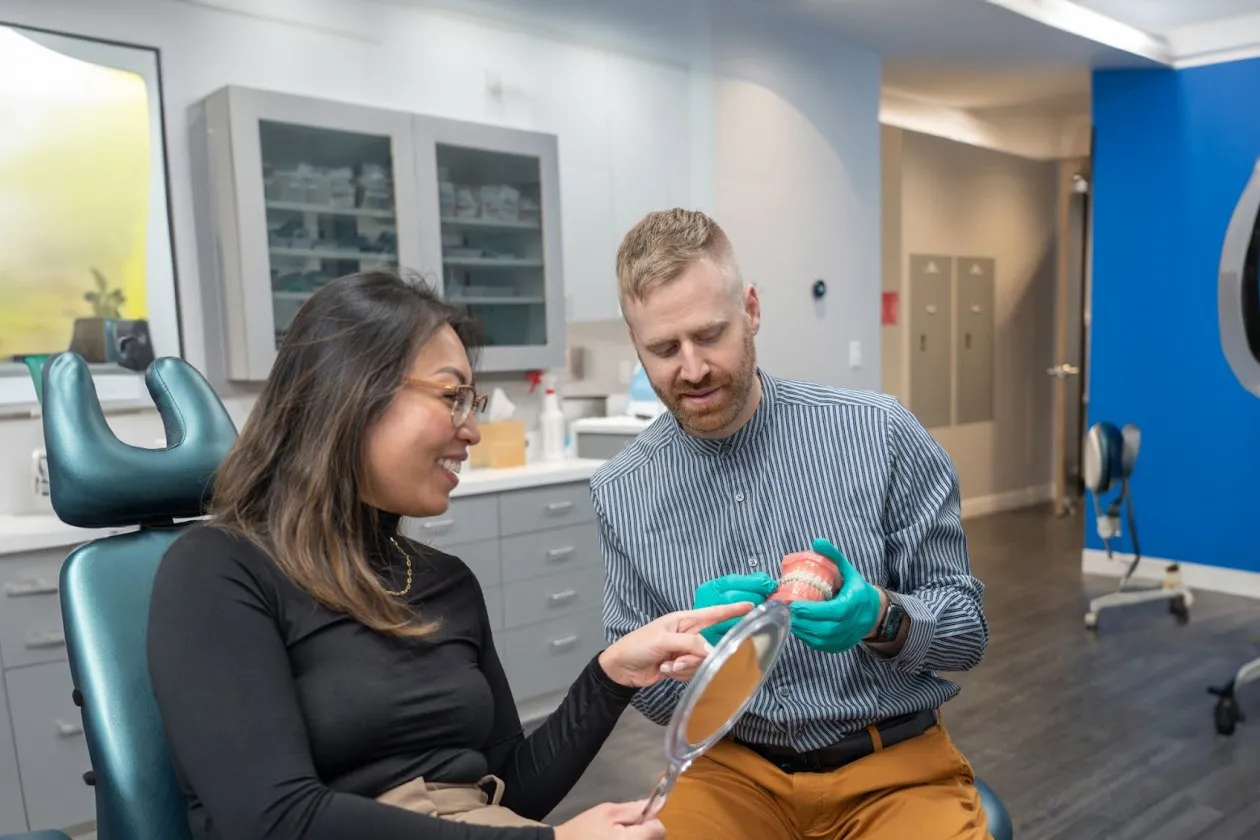
Clear aligners have changed what people expect from orthodontic treatment. No more metal brackets. No more food restrictions. Just a series of nearly invisible trays that gradually shift your teeth into place while you go about your life. At Berger Orthodontics in Arvada, CO, we’ve watched this shift happen firsthand.
This technology has been reshaping how smiles get straightened, and our practice has had a front-row seat to the change. People who once dreaded the idea of braces now ask about Invisalign by name. And for good reason: it works.
What Is Invisalign and Why Is It Changing Orthodontics?
Invisalign is a clear aligner system that straightens teeth using custom-made, removable plastic trays instead of traditional metal brackets and wires. Each set of aligners applies gentle, controlled pressure to gradually move your teeth into their ideal positions over time, offering a discreet alternative to conventional braces.
SmartTrack thermoplastic material, which the FDA has cleared for orthodontic use, is what these aligners are made from. Engineers designed this material specifically for comfort and precision. It fits snugly against your teeth while remaining flexible enough to remove for eating and brushing.
Since Align Technology introduced Invisalign in 1997, the system has treated over 14 million smiles worldwide. That’s not a marketing number. It reflects decades of refinement based on real treatment outcomes. The American Association of Orthodontists has noted that clear aligner therapy has become one of the fastest-growing segments in the orthodontic field.
What makes modern Invisalign different from early versions is the digital planning involved. At Berger Orthodontics in Arvada, CO, we use iTero 3D scanning to capture detailed images of your teeth. Messy impressions are a thing of the past, replaced by a precise digital model for treatment planning. You can actually see a projected image of your final smile before you get started.
Dr. Michael Berger offers Invisalign for kids, teens, and adults. Each age group has specific aligner options designed for their needs. Growing children benefit from Invisalign First, while teens get compliance indicators built into their trays. Adults appreciate the discretion of aligners that most people never notice.
How Invisalign Works: A Streamlined Process for a Straighter Smile
Getting started with Invisalign at Berger Orthodontics involves five steps: a free consult with 3D scanning, custom treatment planning, aligner fabrication, daily wear, and regular check-ins. Here’s what the experience looks like:
Step 1: Your Free Consult
At your first visit, we take a digital 3D scan of your teeth using iTero technology. The scan is quick and comfortable, nothing like the gooey impressions you might remember from childhood dentist visits. Thousands of data points create an exact digital replica of your mouth, giving us everything we need to map out your treatment.
Step 2: Your Custom Treatment Plan
Using your scan data, we build a ClinCheck treatment plan that maps out every stage of your tooth movement from start to finish. You’ll see a simulation of how your teeth will shift with each aligner set. Think of it as a time-lapse of your future smile, one you can watch before committing to anything.
Step 3: Receiving Your Aligners
Once you approve your treatment plan, Align Technology manufactures your custom aligner series. Each tray is made specifically for your teeth at each stage of treatment. You’ll receive several sets at a time to minimize visits to our practice, which means fewer trips and more convenience.
Steps 4 & 5: Wearing Your Aligners and Checking In
You’ll wear each set of aligners for 20 to 22 hours per day. Most people switch to a new tray every one to two weeks, depending on their treatment plan. Remove them only for eating, drinking anything besides water, and brushing your teeth.
We’ll see you every six to eight weeks to monitor your progress and provide your next sets of aligners. These visits are typically quick, focused on making sure everything is tracking correctly. If anything needs adjusting, we handle it right then to keep your treatment on schedule.
What Are the Key Benefits of Choosing Invisalign Over Traditional Braces?
People choose Invisalign for different reasons. Some prioritize appearance. Others value convenience. Here are the benefits that matter most to the people we treat at Berger Orthodontics:
Nearly Invisible, Totally Discreet
The aligners are made from clear plastic that sits flush against your teeth. Most people won’t notice you’re wearing them unless they’re looking closely. For professionals in meetings, teens scrolling through group photos, or anyone who wants to straighten their teeth without announcing it to the world, this discretion makes a real difference.
Take Them Out When You Need To
Unlike braces, you can take Invisalign out. This means:
- Eating whatever you want without restrictions
- Brushing and flossing normally
- Removing aligners for special occasions
- No food getting stuck in brackets
No Brackets, Nothing to Break
Picture this: it’s a Sunday afternoon and you bite into something that snaps a bracket off your braces. Now you need an emergency visit. With Invisalign, there’s nothing to break. If you lose an aligner, you simply move to your next set or go back one set while we order a replacement. That peace of mind matters.
Comfort Without the Metal
Smooth plastic edges don’t irritate your cheeks and gums the way metal brackets can. There’s no adjustment period of building up calluses inside your mouth. After the first few days with a new set, most people report they barely notice the aligners are there.
How Long Does Invisalign Take Compared to Other Options?
Many Invisalign cases complete in 12 to 18 months. Some simpler cases finish even faster. Digital planning helps predict treatment time accurately, so you know what to expect from the start. At Berger Orthodontics, Dr. Berger’s ClinCheck plan maps out this timeline before your treatment begins.
Invisalign vs. Braces: Which Orthodontic Option Is Right for You?
Both Invisalign and braces effectively straighten teeth. The right choice depends on your specific situation, lifestyle, and preferences.
| Factor | Invisalign | Traditional Braces |
|---|---|---|
| Appearance | Clear, nearly invisible | Metal or ceramic brackets visible |
| Comfort | Smooth plastic, minimal irritation | Wires may irritate cheeks and gums |
| Diet | No restrictions (remove to eat) | Avoid hard, sticky, crunchy foods |
| Oral Hygiene | Remove to brush and floss normally | Requires special tools to clean around brackets |
| Treatment Compliance | Must wear 20-22 hours daily | Always working (no compliance needed) |
| Complex Cases | Effective for mild to moderate issues | May be better for severe malocclusion |
| Office Visits | Every 6-8 weeks | Every 4-6 weeks for adjustments |
When Might Braces Be a Better Option?
Braces remain the go-to option for certain complex cases. Severe rotations, significant bite issues, and cases requiring precise vertical tooth movement sometimes respond better to bracket-and-wire systems. Braces also work continuously, so there’s no risk of someone not wearing them enough. For some people, that built-in compliance is a genuine advantage.
When Does Invisalign Work Best?
For mild to moderate crowding, spacing, and bite issues, Invisalign delivers excellent results with added convenience. The removable design makes it easier to maintain oral health during treatment. And the aesthetic advantage matters to many people who want to keep their orthodontic treatment private.
During your free consult at Berger Orthodontics, Dr. Berger will assess your specific case and recommend the best option. Sometimes the answer is clearly one or the other. Sometimes either would work well, and it comes down to your preferences.
How Much Does Invisalign Cost?
Invisalign treatment typically ranges from $3,000 to $8,000, depending on case complexity and treatment duration. This price range is often comparable to traditional braces for similar orthodontic issues, and most dental insurance plans with orthodontic benefits cover Invisalign the same way they cover braces. Several factors influence your specific cost, which we break down during your free consult at Berger Orthodontics in Arvada, CO.
Here’s what affects pricing:
- Case Complexity: Simple spacing issues cost less than significant bite corrections. A mild crowding case and a full bite realignment are very different treatments with very different price tags.
- Treatment Duration: Longer treatments require more aligner sets
- Additional Steps: Some cases need attachments or refinement trays, which can add to the total
- Provider Experience: Orthodontists like Dr. Berger bring specialized training to treatment planning, and that expertise shows in the results
Does Insurance Cover Invisalign?
Most dental insurance plans with orthodontic benefits apply those benefits to Invisalign the same way they would for braces. We recommend checking your specific plan details, and our team can help verify your coverage before you get started.
What Payment Options Are Available?
Because orthodontics is for everyone, we think cost shouldn’t prevent anyone from getting a great smile. Berger Orthodontics offers:
- Low monthly payment plans
- Flexible financing options
- An online payment calculator to estimate your investment
Your free consult includes a personalized cost breakdown based on your individual treatment needs. There’s no commitment, just clear information so you can make the right decision for your situation.
Who Is a Good Candidate for Invisalign?
Good candidates for Invisalign include children, teens, and adults with mild to moderate orthodontic issues like crowding, gaps, or bite misalignment who can commit to wearing aligners 20 to 22 hours daily. Dr. Berger evaluates each smile’s unique needs to determine the best path forward.
What Conditions Can Invisalign Treat?
- Crowded teeth, where there isn’t enough room for teeth to sit straight
- Gaps between teeth
- Overbite
- Underbite
- Crossbite
- Open bite, where the front teeth don’t meet when the mouth is closed
What Are the Age Requirements?
- Children (ages 6-10): Invisalign First addresses early orthodontic concerns in growing mouths
- Teens: Invisalign Teen includes compliance indicators and replacement aligners for lost trays
- Adults: No upper age limit. We’ve treated people in their 60s and beyond
Do You Have to Wear Invisalign All Day?
Here’s the honest part: Invisalign only works if you wear it. The aligners need to stay in your mouth 20 to 22 hours per day. That means only removing them for meals and oral hygiene. People who struggle with this commitment may see slower results or incomplete treatment.
Who Might Need a Different Approach?
Some cases respond better to traditional braces:
- Severe malocclusion requiring significant tooth movement
- Complex rotations that need precise bracket positioning
- People who know they won’t wear aligners consistently
How Can You Know for Sure?
A free consult at Berger Orthodontics in Arvada, CO confirms whether Invisalign is right for you. The 3D scan shows exactly what we’re working with, and Dr. Berger can explain which treatment options would work best for your specific situation.
Frequently Asked Questions About Invisalign
How long does Invisalign treatment take?
Most Invisalign treatments complete in 12 to 18 months. Simpler cases with minor crowding or spacing may finish in as few as 6 months, while more complex cases can take up to 24 months. Your ClinCheck treatment plan provides a projected timeline based on your specific tooth movements.
Does Invisalign hurt?
You’ll feel pressure when you switch to a new aligner set, which is normal and means the aligners are working. Most people describe it as mild discomfort rather than anything sharp. The sensation typically fades within a day or two, and over-the-counter relievers help if needed, though many people don’t require them.
Can you eat with Invisalign?
Remove your aligners before eating or drinking anything besides water. This protects the trays from staining and damage, and it means you can eat whatever you want. Just brush your teeth before putting the aligners back in.
How often do I visit the orthodontist during Invisalign?
Plan for check-ins every six to eight weeks at Berger Orthodontics in Arvada, CO. These visits are usually quick. We verify that your teeth are moving as planned and provide your next sets of aligners. Remote dental monitoring technology can sometimes extend the time between visits for people who are tracking well.
Is Invisalign as effective as braces for complex cases?
For mild to moderate orthodontic issues, Invisalign delivers results comparable to braces. Complex cases involving severe rotations, significant bite problems, or substantial vertical tooth movement may respond better to traditional braces. Dr. Berger evaluates each case individually and recommends the option most likely to achieve your goals.
What happens if I lose an aligner?
Contact us at Berger Orthodontics right away. Depending on where you are in your treatment, you may move to your next aligner set early or go back to your previous set temporarily. Invisalign Teen includes replacement aligners for this reason. Adults can order replacements, though there may be a fee.
Clear aligners have genuinely changed what orthodontic treatment looks like. The technology keeps improving, the results keep getting better, and more smiles of all ages can straighten their teeth without the look and feel of traditional braces.
If you’re curious whether Invisalign could work for you, a free consult at Berger Orthodontics is a great place to start. You’ll get a 3D scan, see what treatment would involve, and get honest answers about whether clear aligners make sense for your situation. Get started on your new smile today.